

Many people worry that the fats found in tree nuts will increase blood lipid levels. However, recent clinical studies show that cashews lower cholesterol levels noticeably if you consume them correctly. If you want to know what to eat to lower cholesterol naturally, read our expert guide below.
What is the Mechanism of How Cashews Lower Cholesterol in the Blood Stream?
Cashews are a natural whole food packed with great nutrients like dietary fiber, antioxidants, vitamins, and vital minerals. But specifically, how cashews lower cholesterol exactly.

1. Oleic Acid in Cashews Helps Reduce Bad Cholesterol
The nut can reduce bad cholesterol because its organic structure contains a large amount of monounsaturated and polyunsaturated fats. Cardiovascular specialists strongly encourage adding this healthy fat group to your daily meals. Oleic acid (Omega-9) is the primary lipid in this group.
When entering your body, this compound stimulates the liver to strengthen its filtration membranes. This allows the liver to actively absorb and flush out bad cholesterol (LDL) from your arteries, preventing dangerous plaque buildup.
Additionally, this nutrient preserves and optimizes the productivity of good cholesterol (HDL). HDL acts as a helpful cleanup crew that gathers excess fats and returns them to the liver for processing.
Beyond protecting your heart, oleic acid offers comprehensive wellness benefits: it stabilizes heart rhythms, regulates blood pressure, and fights inflammation, keeping you full of youthful energy every day. A study published in The American Journal of Clinical Nutrition (2017) confirmed that eating these nuts daily causes a significant drop in total cholesterol and bad cholesterol (LDL) in adults with mild hypercholesterolemia.
2. Phytosterols Prevent Excess Cholesterol from Entering the Blood
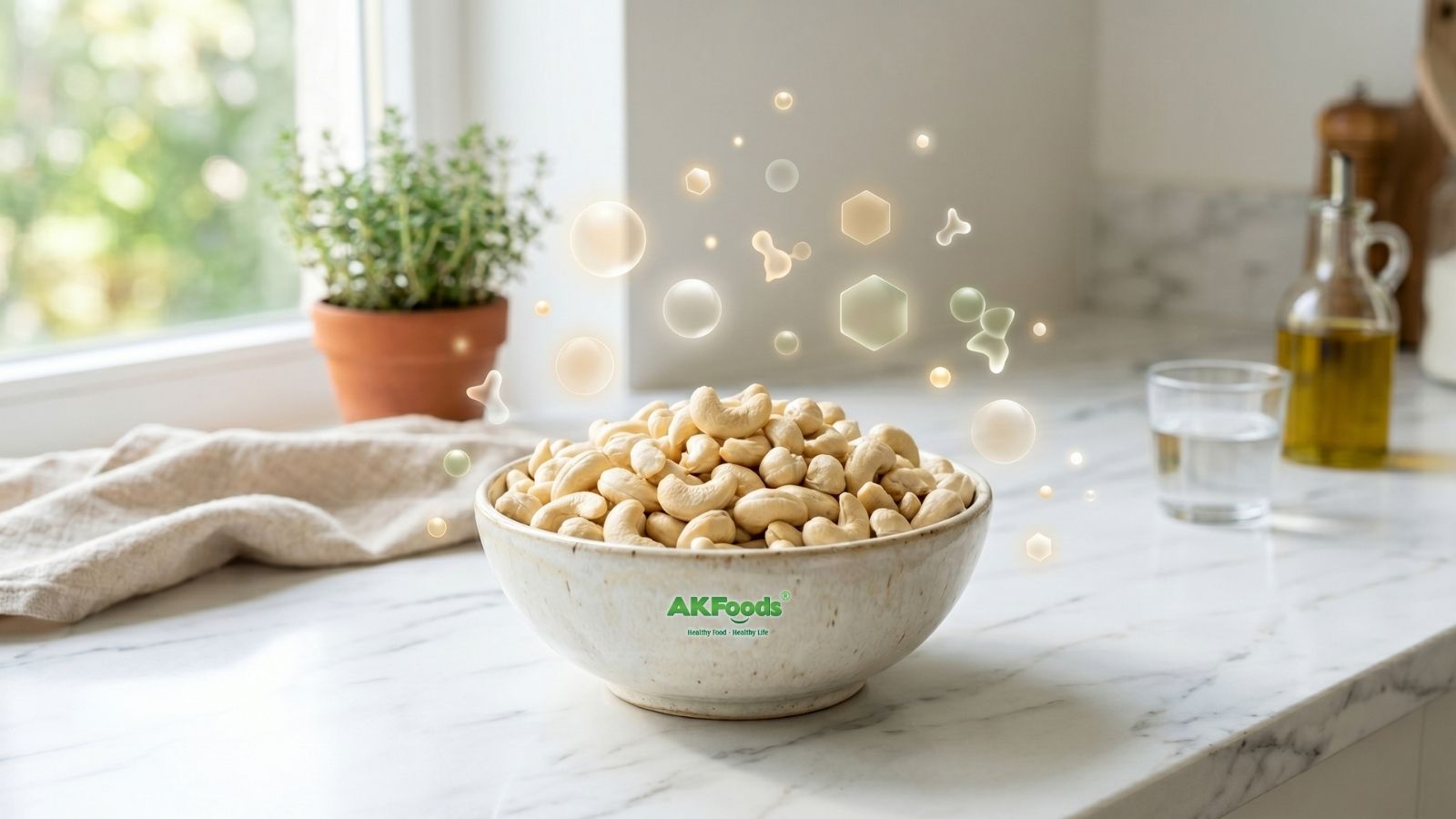
A lesser-known secret hidden inside the cashew nutrition profile is the presence of phytosterols. These are natural plant sterols with a structural shape very similar to cholesterol. This compound functions as a perfect camouflage shield, helping block your digestive tract from absorbing excess cholesterol from other heavier foods.
When you consume a meal, the phytosterols in the nut actively compete and take over the absorption sites on your intestinal cells first. As a result, the bad and excess cholesterol from your other dishes lose their binding spots. They cannot pass through the intestinal walls into your bloodstream and are discarded naturally out of the body instead.
Thanks to this smart blocking mechanism, regular nut consumption will dramatically reduce bad cholesterol and stop lipid accumulation in blood vessels. The US Food and Drug Administration (FDA) states that foods containing plant sterols can lower the risk of coronary heart disease by lowering blood cholesterol concentrations. Learning how to eat cashews properly helps optimize your good cholesterol (HDL) ratio, keeping your blood clean and circulating smoothly.

A Master Guide on How to Eat Cashews Properly to Manage Health Risks
Multiple scientific papers indicate that substituting carbohydrate-heavy snacks with these nutrient-dense seeds helps drop total cholesterol and bad cholesterol remarkably. Furthermore, a 2019 study in the journal Nutrients reaffirmed that daily intake (around 28-64g/day) does not lead to weight gain. Instead, it greatly improves blood lipid metrics due to the high concentration of oleic acid. According to the US National Library of Medicine, these kernels rank in the top 3 most consumed nutritious nuts across America.
How Many Kernels Should You Eat Daily?
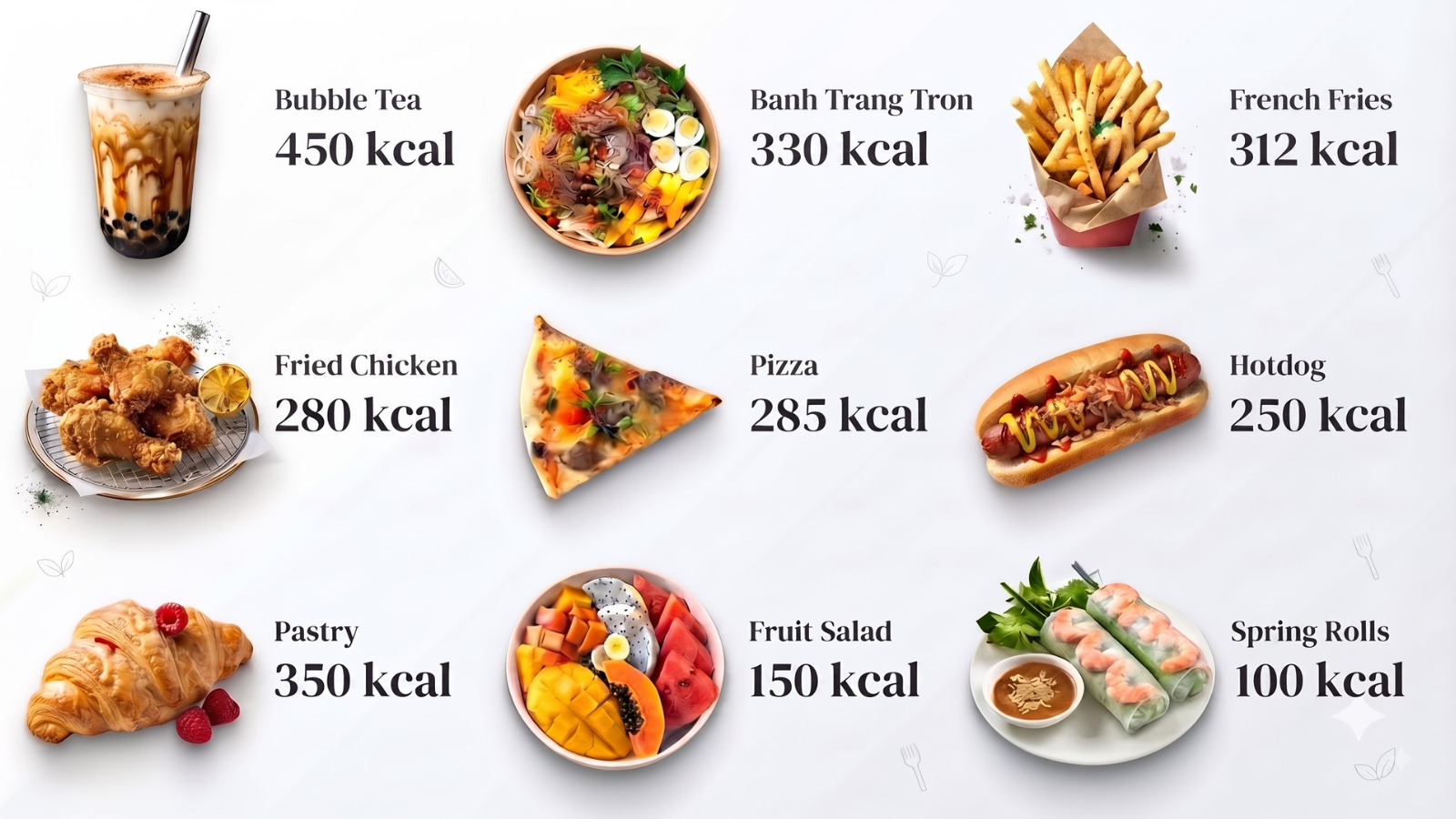
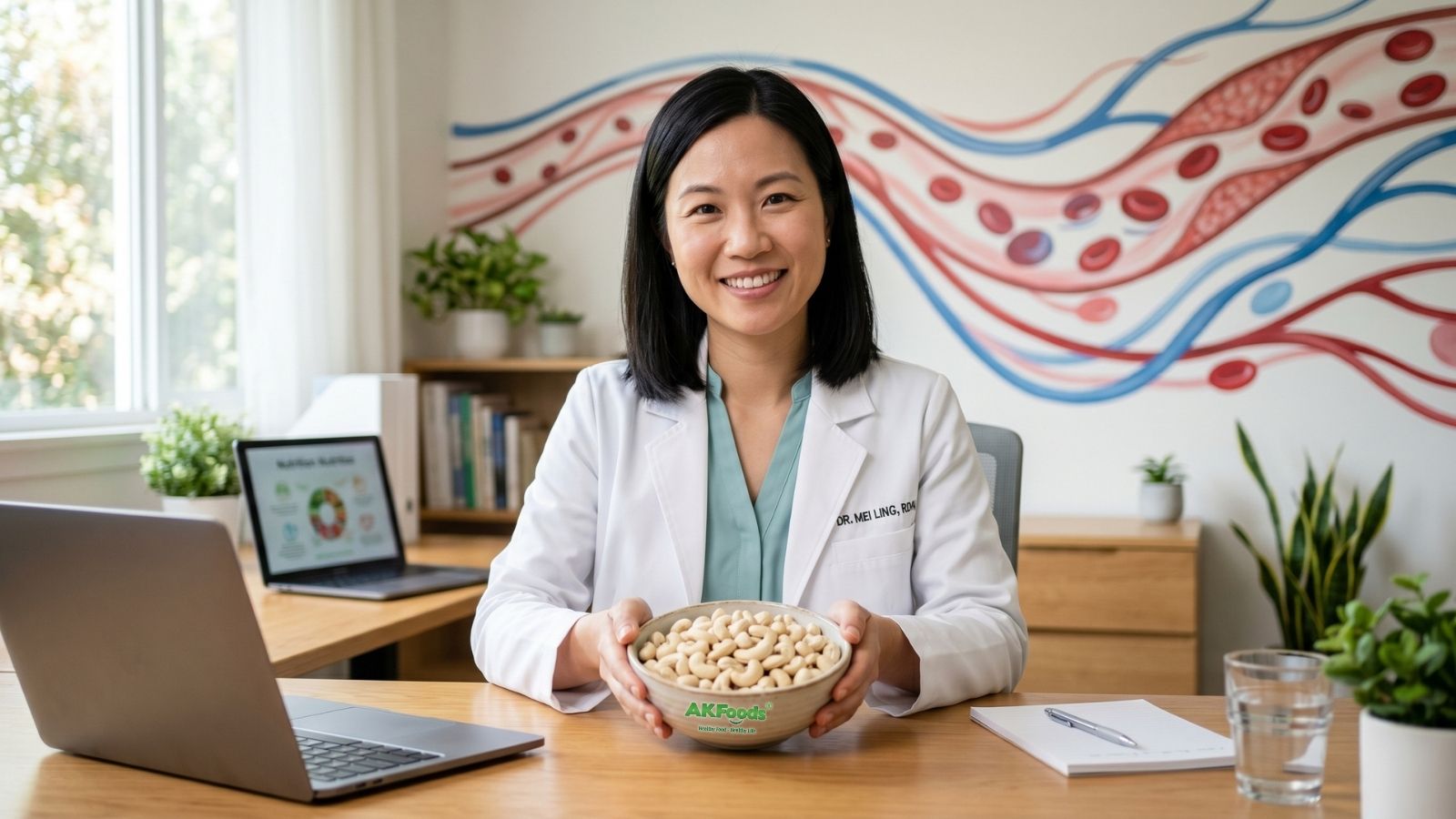
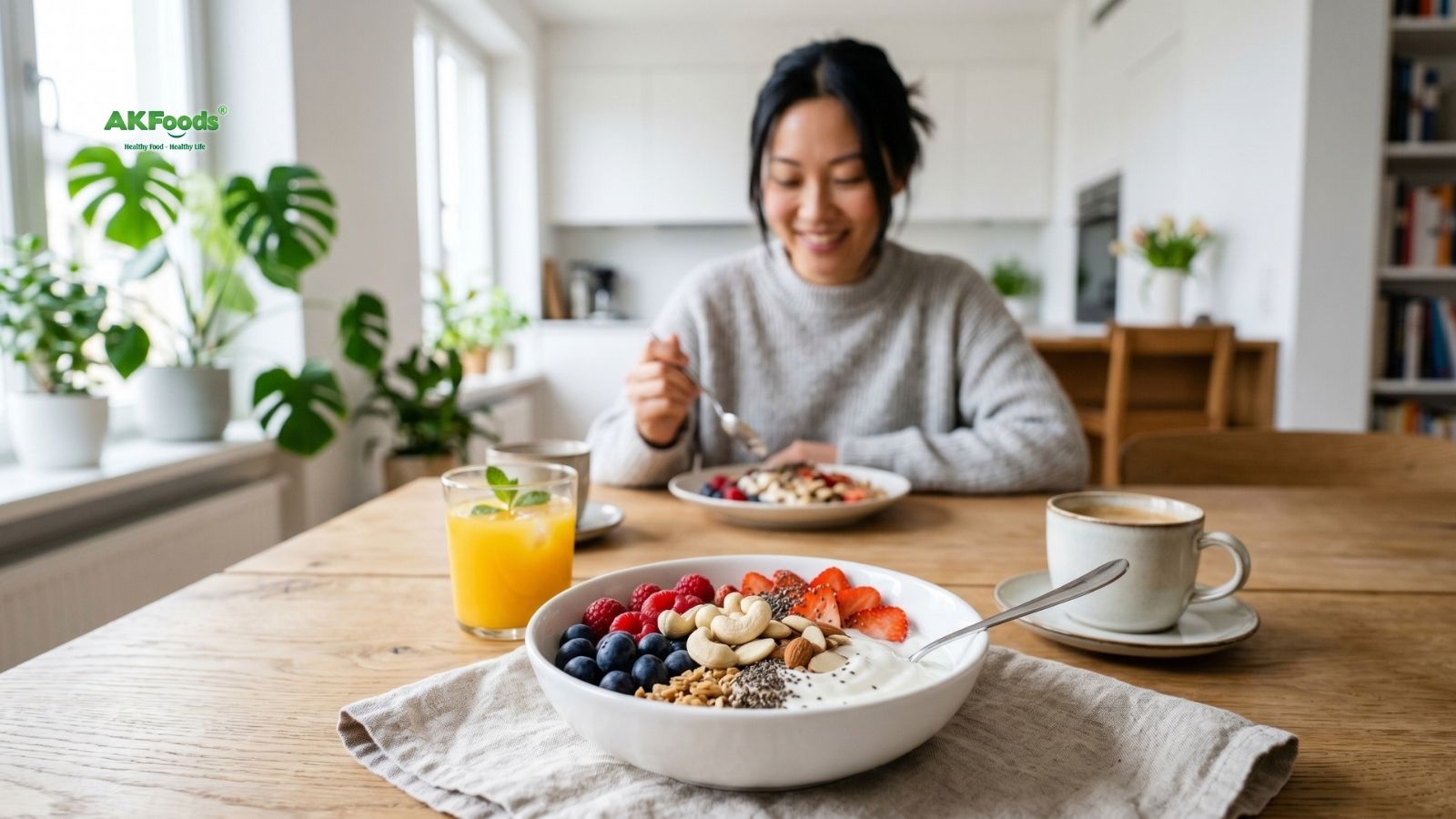
Although these seeds are incredibly healthy, they still carry a high concentration of calories. Healthcare professionals recommend that an adult should only consume about 20 to 30 grams per day (equal to 15 to 18 kernels). You can separate this amount into multiple light snacks or mix them with yogurt, fresh salads, or blend them into home-made nut milk for your daily eat to lower cholesterol menu.
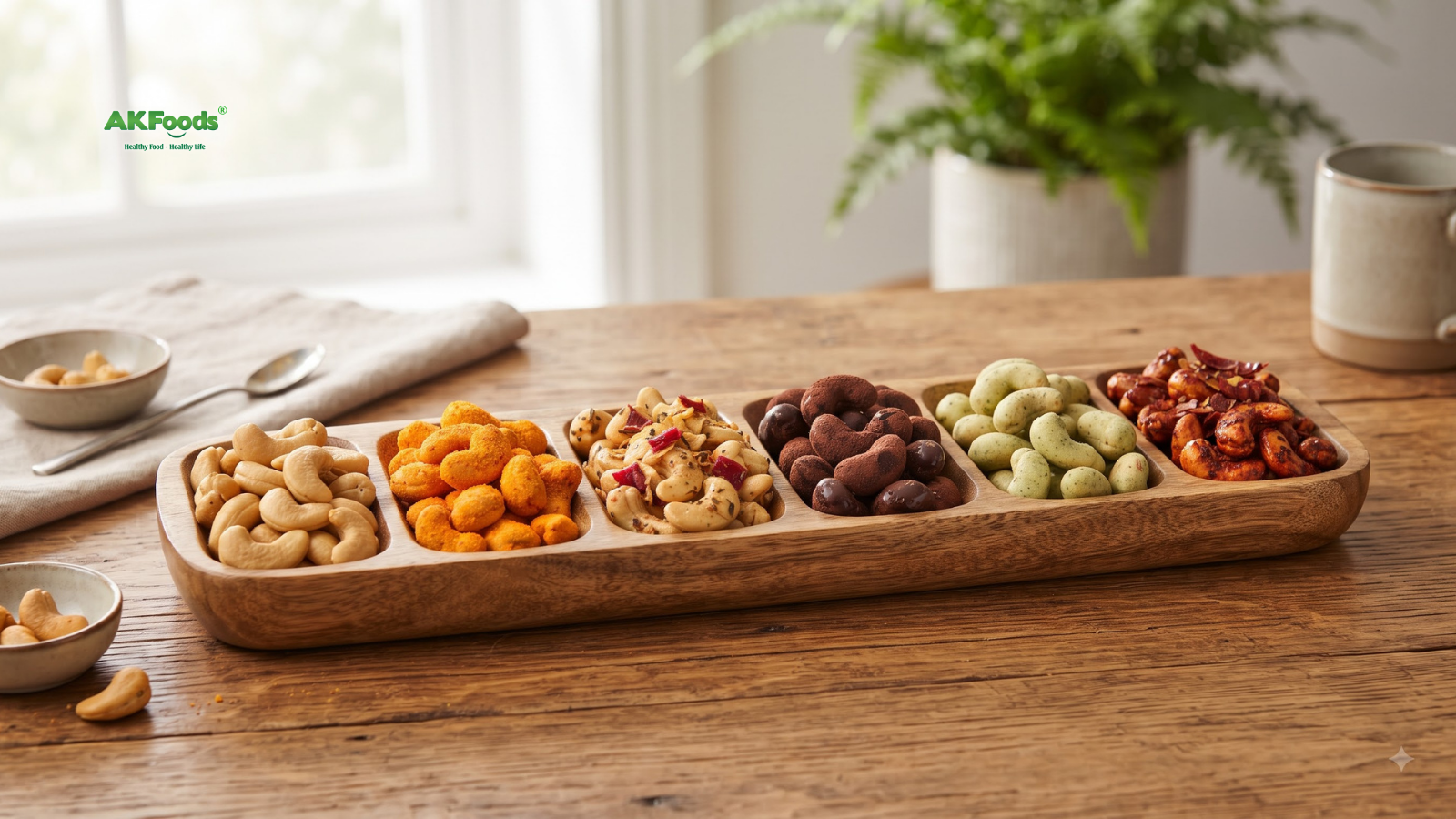
This strict portion control applies to both plain varieties and flavored items like chili garlic, BBQ, or spicy Tom Yum variations. Because flavored products use extra seasonings, their total calories, sodium, and sugar levels are higher than raw or plain roasted options. You must consume a lower amount of flavored variants compared to plain products to maintain your body in its best physical condition.
Conclusion
This guide summarizes how cashews lower cholesterol and highlights important habits for your daily routine. AKFoods hopes you can build a healthy nut-eating habit to protect the well-being of yourself and your loved ones.
Check out the premium selection at An Khang Foods to upgrade your family’s cardiovascular defense system today! As a ‘Modern Artisan’, An Khang Foods practices strict selection standards to source the finest materials from trusted farms. Using unique processing recipes, we deliver premium products that ensure ‘Full Nutrition, Perfect Taste’ for your modern, healthy lifestyle.