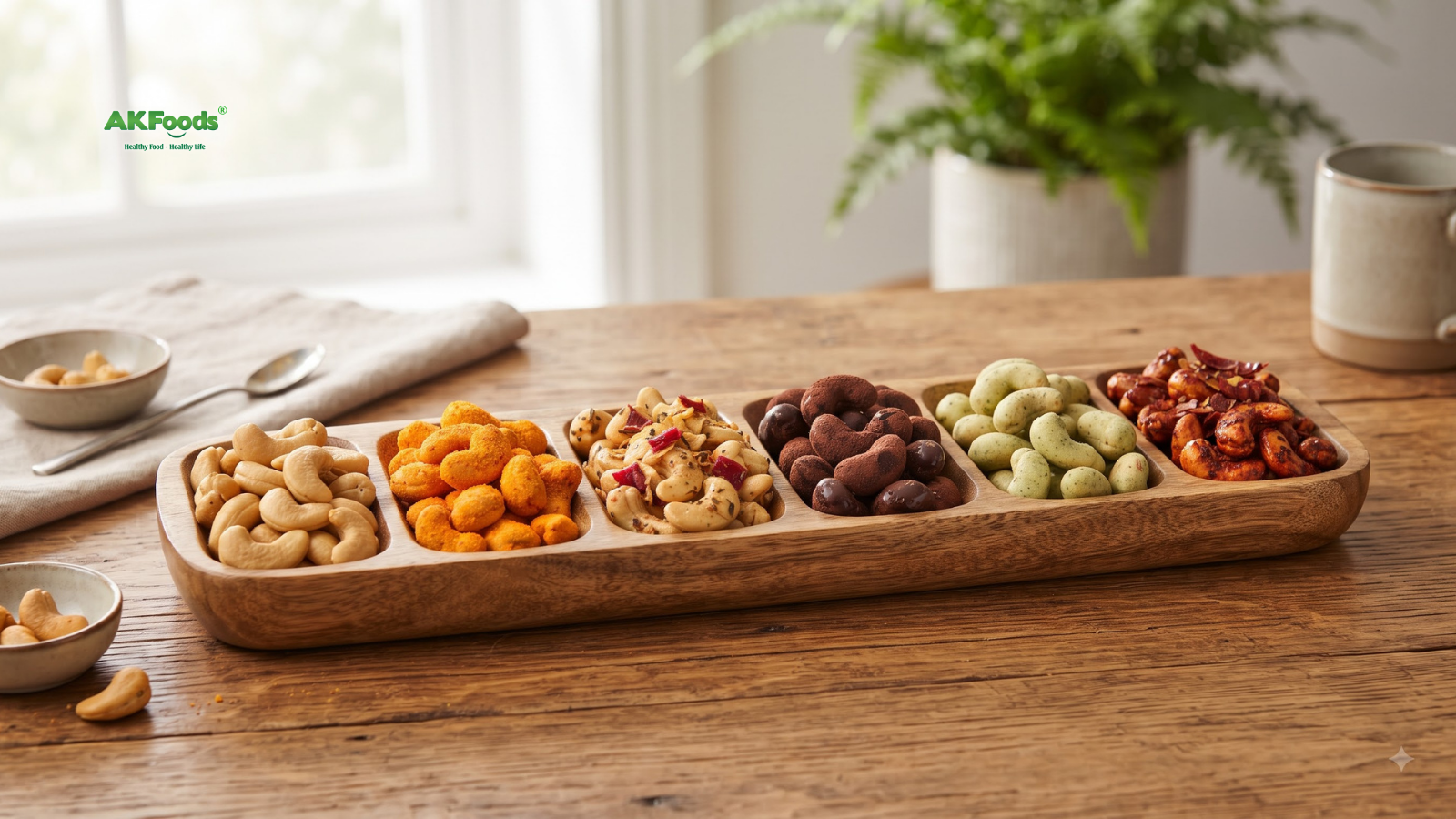



Plant-based nuts provide clean protein, dietary fiber, and healthy lipids. Mixing nuts into daily diets adds variety to culinary textures while improving vitamin absorption for long-term health.
Nutritional composition and principles of mixing nuts
Botanical nuts are nutrient-packed whole foods that contain magnesium, iron, zinc, and monounsaturated fatty acids (MUFAs). Incorporating nuts into regular meals is a simple way to improve your diet.
1. Nutrition in a 28-gram serving
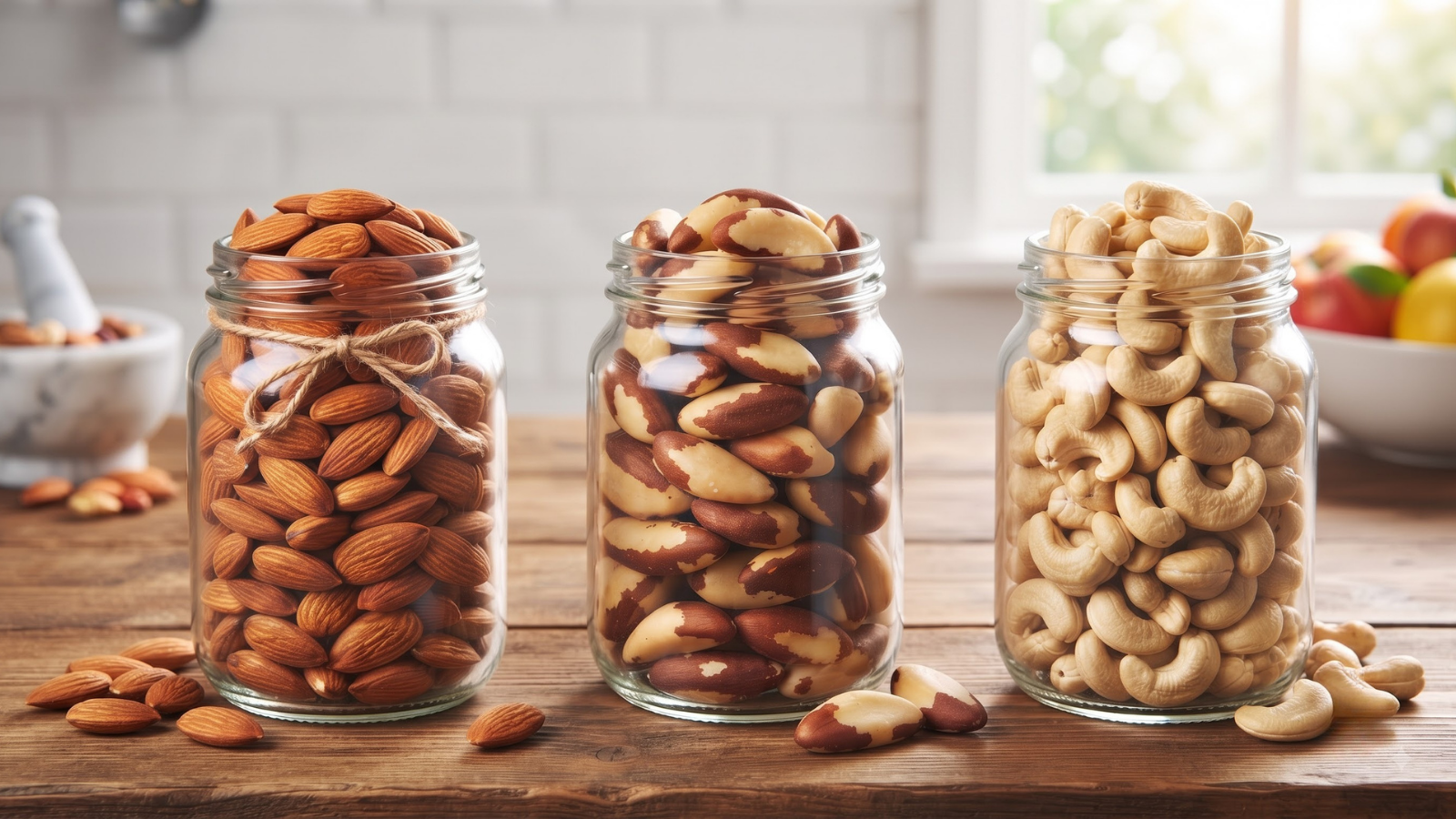
BBC Good Food, the UK’s leading nutrition and culinary platform, points out that almonds, Brazil nuts, and cashews are the top three healthiest nuts.
According to the USDA National Nutrient Database, a 1-ounce (28-gram) serving of raw tree nuts has the following nutritional yield:
| Top 3 | Calories | Total fat | Protein | Dietary fiber | Key micronutrients (% daily value) |
| Almonds | 170 kcal | 15g | 6g | 3g | Vitamin E (45% DV), magnesium |
| Brazil Nuts | 187 kcal | 19g | 4g | 2g | Selenium (988% DV) |
| Cashews | 157 kcal | 12g | 5g | 1g | Copper (67% DV), magnesium (20% DV), iron |
2. The 40-40-20 nutrient balancing principle
When constructing unique mixed nut combinations, use a structured macronutrient ratio to create balanced meals.
- Lipid-rich group (40%): Walnuts, chia seeds, flaxseeds, and macadamias are high in vital omega-3 fatty acids and unsaturated fats, which help with cardiovascular and brain function.
- Protein-Rich Group (40%): Almonds, pistachios, peanuts, and cashews provide about 5g of plant protein per serving. The cashew diet promotes muscular maintenance and sustained satiety.
- Mineral-Rich Group (20%): Pumpkin seeds (iron and magnesium) and Brazil nuts (selenium) contain essential trace minerals.
5 Ideal ways to mix nuts into daily meals
1. Yogurt parfait with mixed nuts and fresh fruit
- Preparation: Combine 100 g plain unsweetened yogurt with your favorite fruits and a 28 g portion of mixed nuts such as sliced almonds, cashews, and pumpkin seeds.
The American Journal of Clinical Nutrition reveals that mixing unsaturated fats with dairy proteins slows stomach emptying and stabilizes the postprandial blood glucose response.
2. Nutrient-dense mixed nut salad
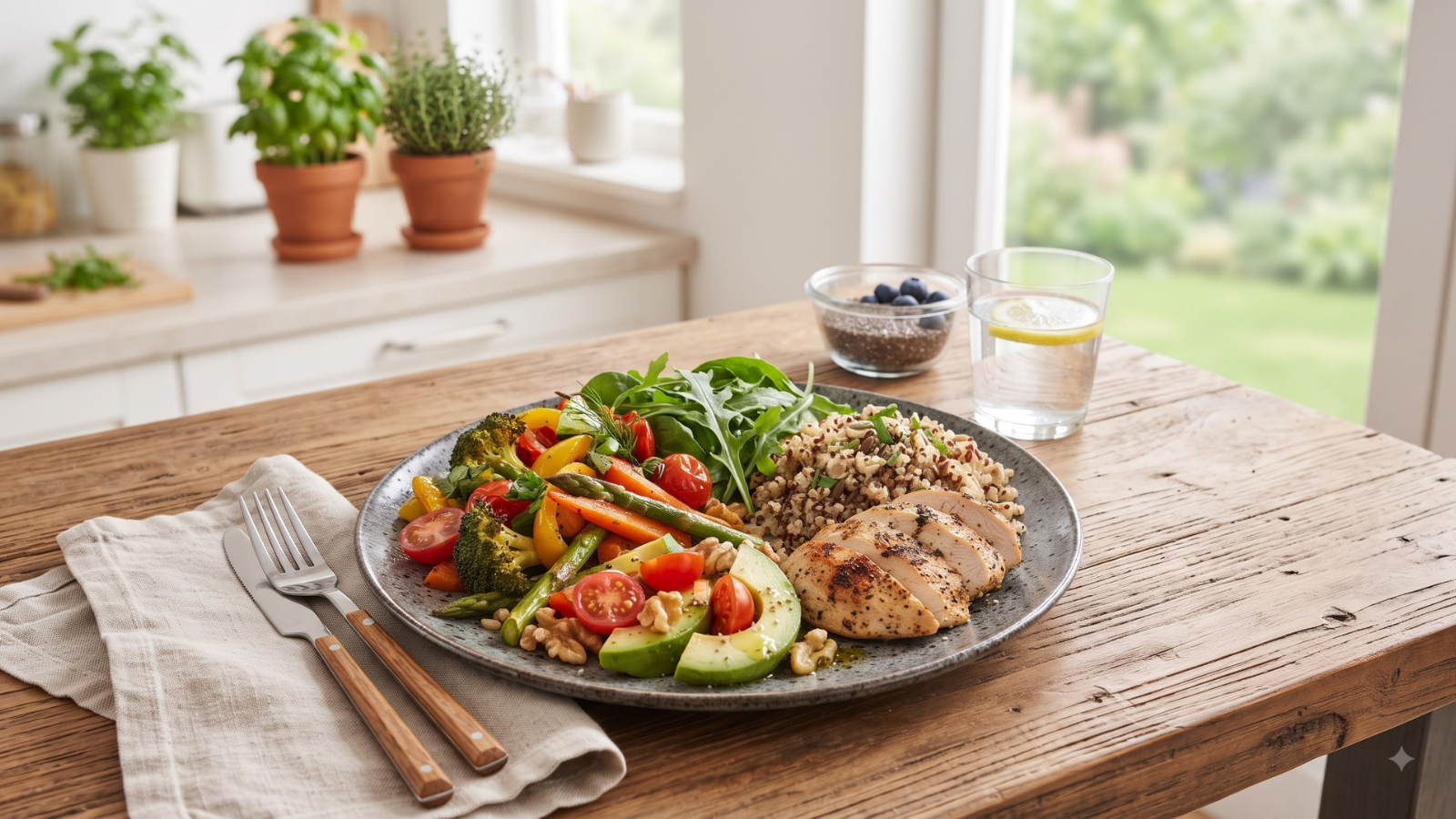
- Preparation: Toss leafy greens, cherry tomatoes, and cucumbers with grilled chicken breast or boiled eggs. Top with crushed walnuts, sunflower seeds, and cashews, dressed with extra virgin olive oil.
Incorporating nuts into meals supplies dietary fiber and essential lipids that enhance the absorption of fat-soluble vitamins (A, D, E, and K).
3. Warm oatmeal or overnight oats
- Preparation: Cook oats with 100 ml of milk or water, then stir in 1 tbs of ground flaxseeds, chia seeds, and chopped cashews for oatmeal. Alternatively, soak oats in 100 ml of milk overnight, and add fruit and yogurt to make it more delicious.
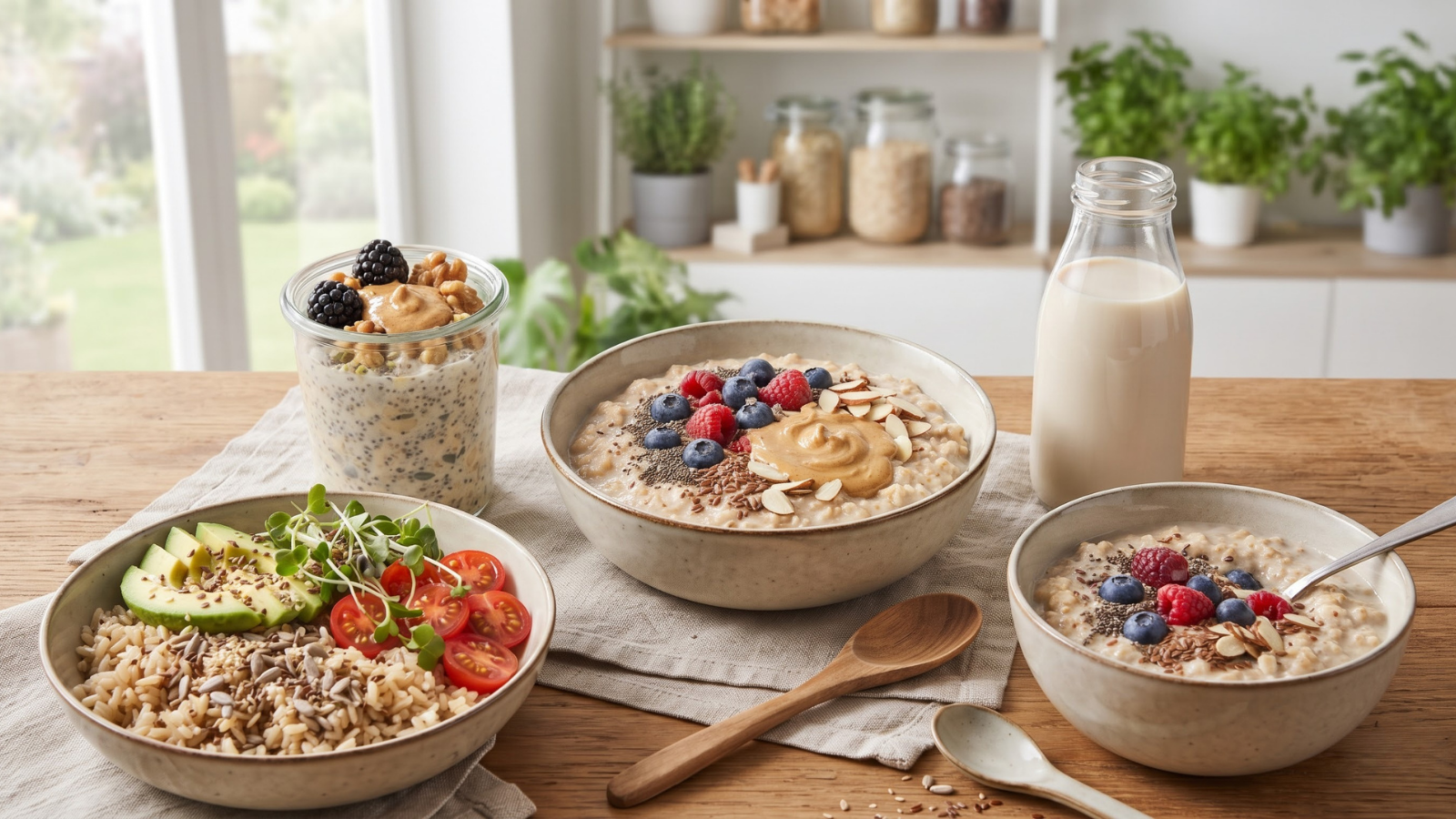
Beta-glucan fiber from oats binds bile acids to encourage cholesterol excretion. Mixing nuts into oatmeal delivers sustained-release energy for morning cognitive focus.
4. Whole-nut smoothies and nut butters
- Preparation: Blend ripe bananas and plant milk with a small handful of raw cashews or almonds until completely smooth.
High-speed blending releases healthy oils naturally present in nuts, creating emulsified textures without commercial additives. This offers rich plant proteins and minerals.
5. Whole-grain rice mixed with whole seeds
- Preparation: Cook brown rice or quinoa together with raw cashew pieces, chickpeas, or green peas.
Preparing healthy nut meals with whole grains reduces the overall glycemic load of cooked starches. The nutritional value of cashews boosts essential vitamins, iron, and zinc in staple dishes.
Science-based portion guidance and proper storage
Understanding optimal consumption thresholds and storage strategies reduces lipid oxidation and ensures food safety.
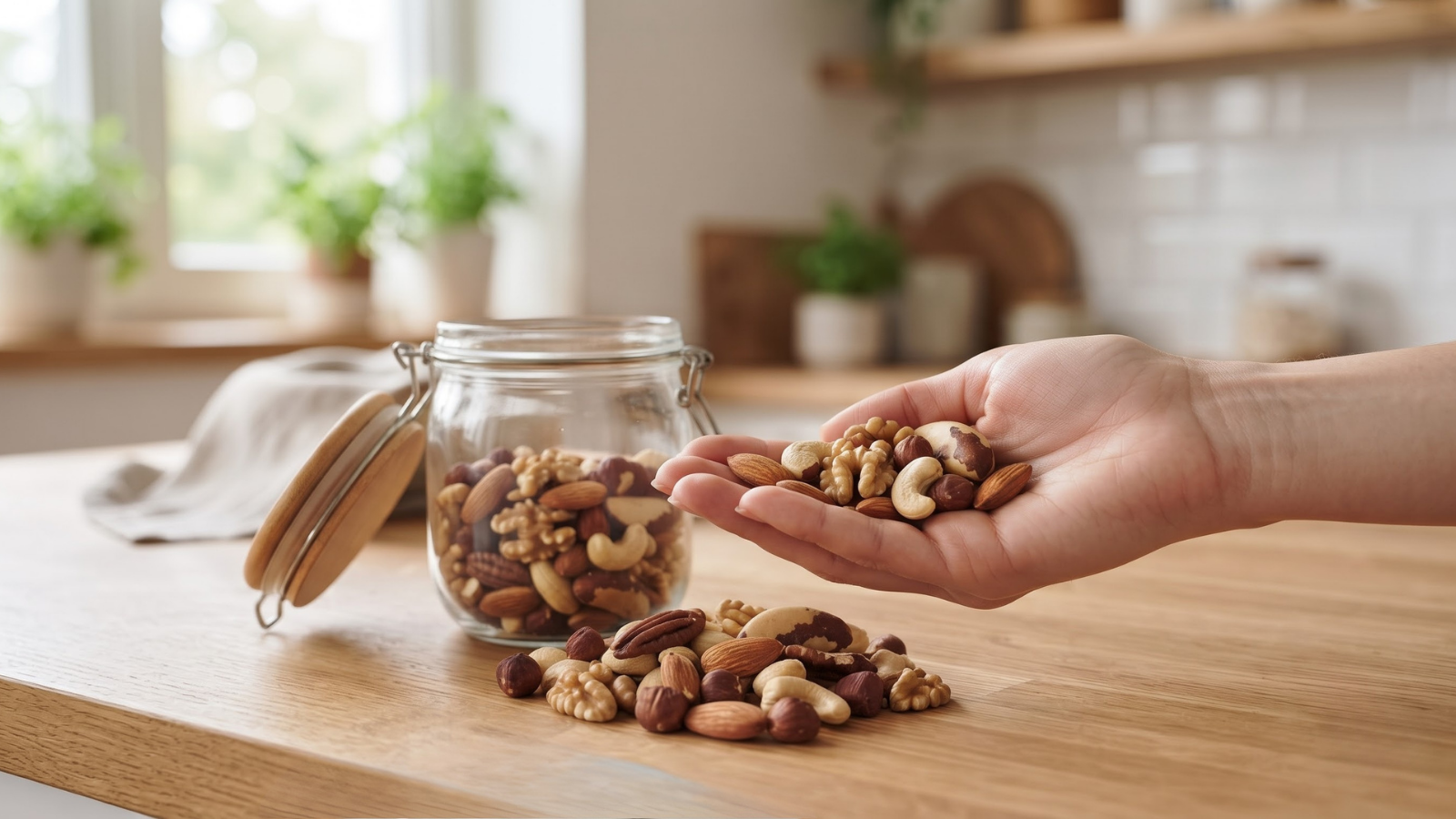
1. The recommended daily consumption
- Optimal Quantity: Consuming 28g to 30g per day (about one small handful) provides essential micronutrients while not exceeding daily calorie requirements.
- Health Benefits: Incorporating nuts into your daily routine at this dosage promotes heart health and decreases biomarkers of systemic inflammation.
2. 2. Storage instructions to avoid rancidity
- Containers: Keep nuts in sealed glass jars with rubber gaskets to prevent oxygen penetration.
- Environment: Keep containers in cool, dark pantries away from direct sunlight and heat sources.
- Refrigeration: Storing mixed nuts prevents lipid oxidation, retaining crispness and reducing rancidity or mold growth.
Consistently incorporating nuts into your home cooking is an effective, evidence-based strategy to improve nutrition. Understanding the nutritional content of cashews, walnuts, and seeds allows you to quickly create healthy nut meals according to your family’s needs.