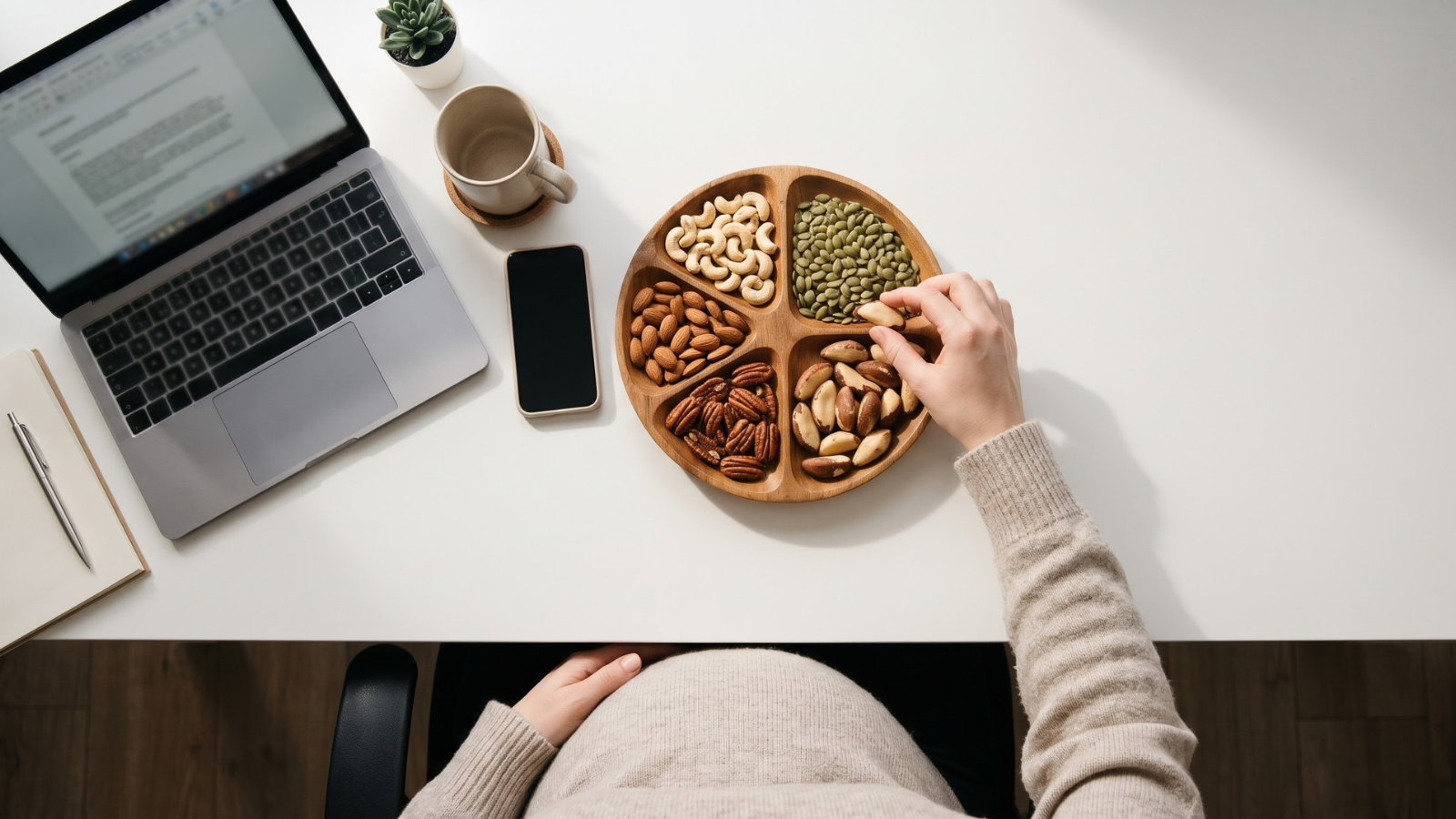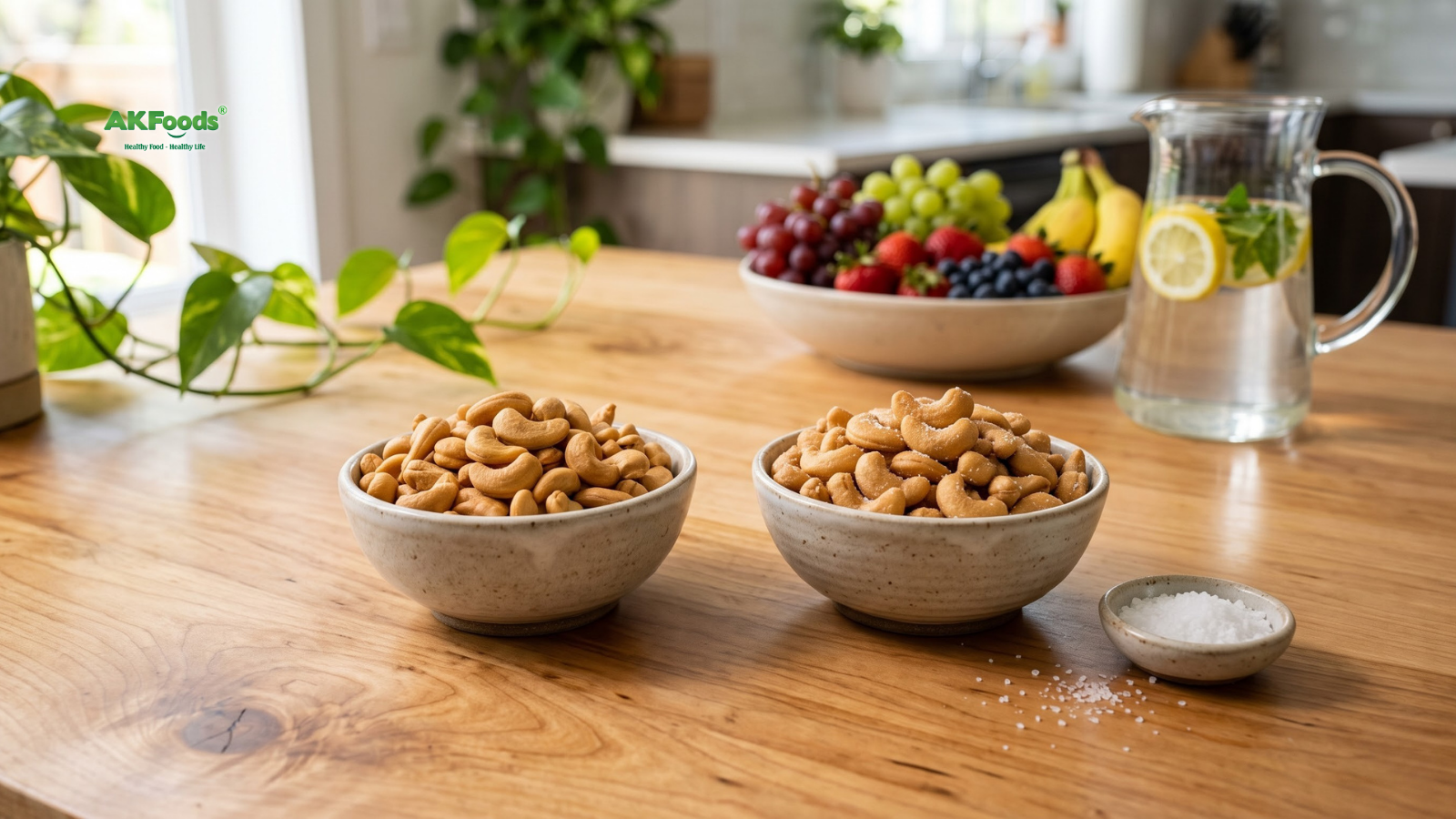


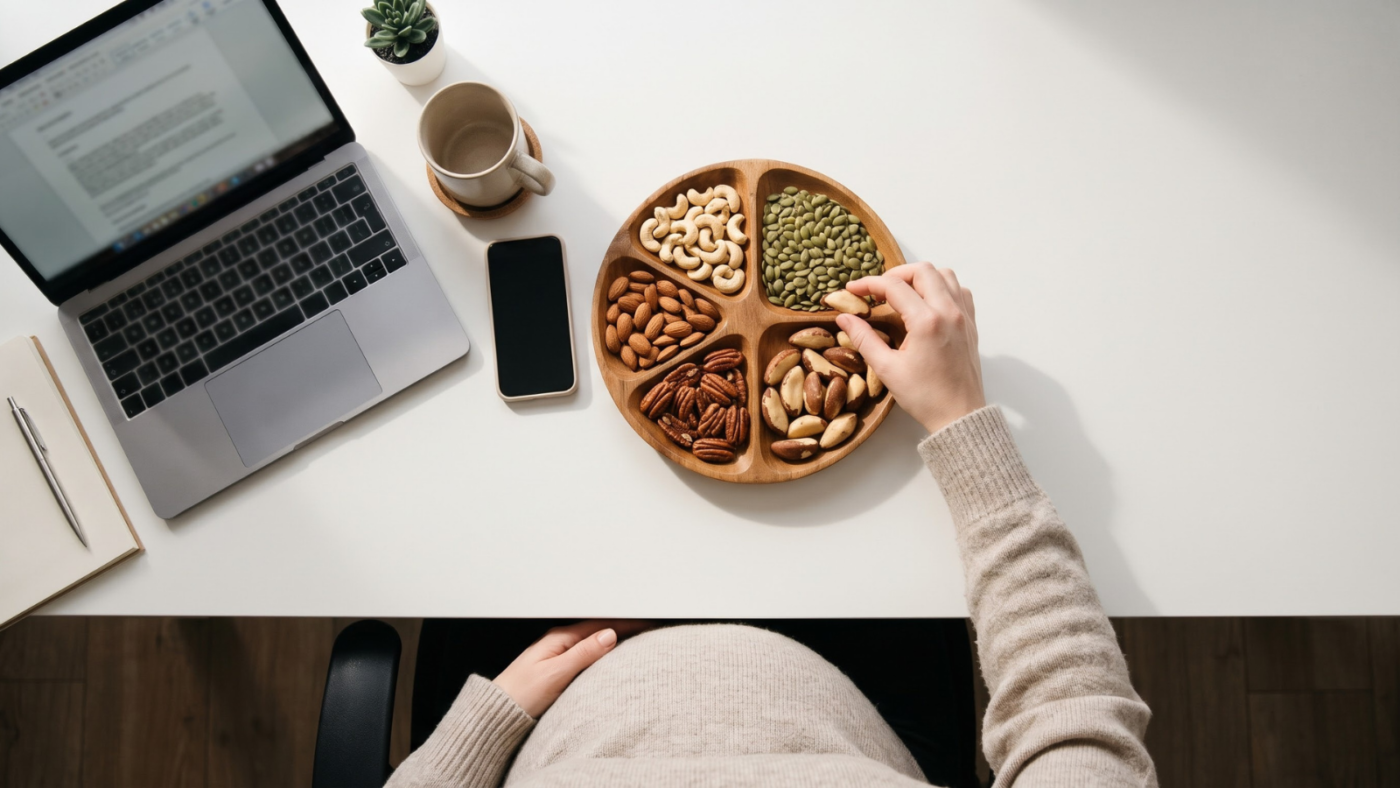
When you’re pregnant, every snack feels like it matters a little more. Nuts are one of the easiest things to grab. They’re small, filling, and packed with healthy fats, protein, fiber, vitamins, and minerals. This guide covers the best nuts for pregnancy, what each one offers you and your baby, and how to enjoy them safely.
Why Nuts Deserve a Spot in Your Pregnancy Nutrition
Your body needs more of certain nutrients right now, including folate, iron, magnesium, zinc, and healthy fats. Nuts won’t cover all of that alone, but a small daily handful is an easy way to add to a balanced diet.
The benefits of nuts for pregnancy come mainly from three things: steady, slow-release energy between meals, fiber that can ease the constipation many mothers-to-be deal with, and a mix of minerals and antioxidants. Nuts are also generally considered safe to eat during pregnancy, as long as you don’t have a diagnosed nut allergy.
That’s why nuts for pregnancy work best as a supporting player in a varied diet, not a miracle food.
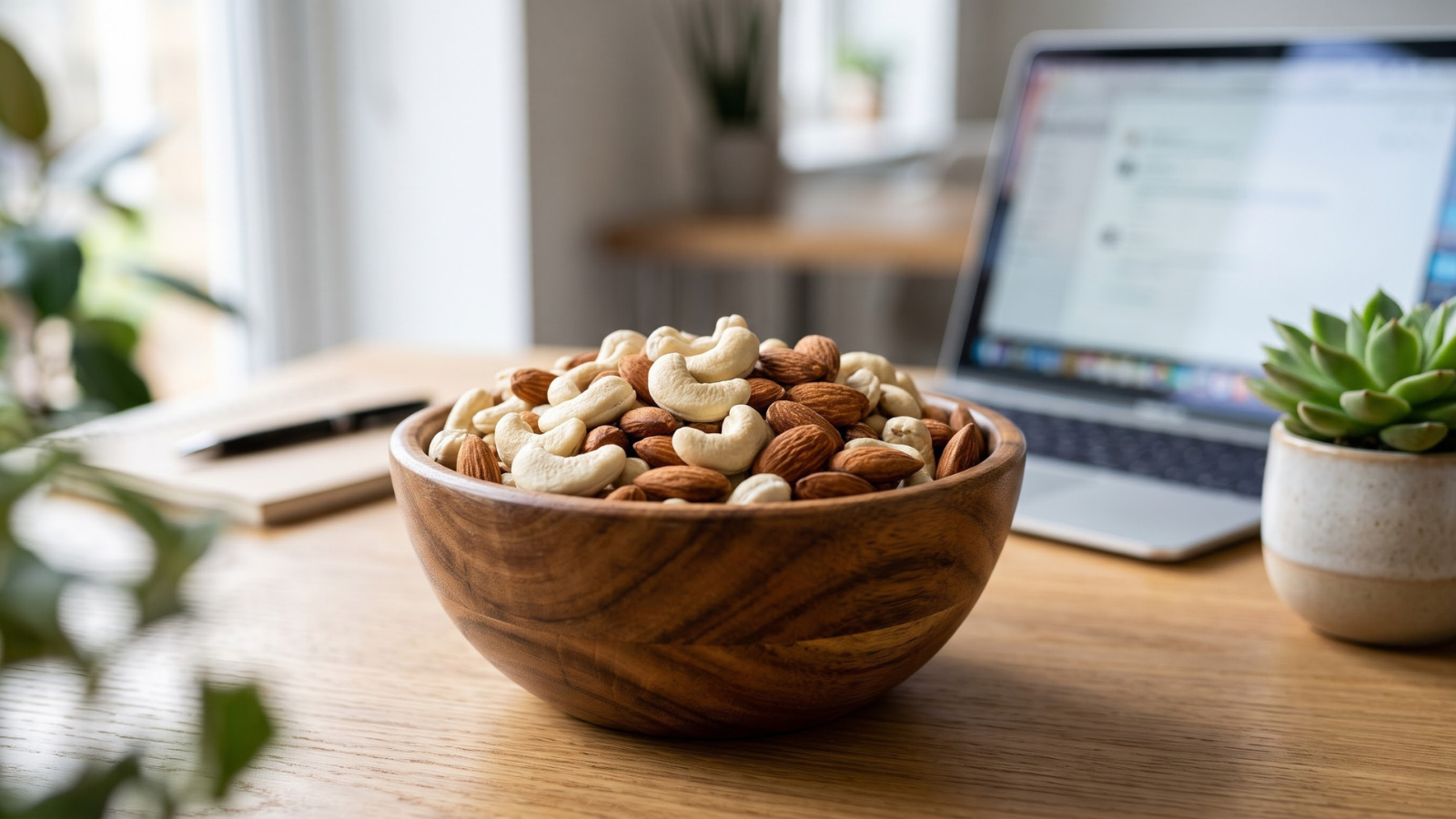
5 Best Nuts for Pregnancy and Fetal Development
1. Walnuts: A Brain-Friendly Pick
Walnuts in pregnancy are popular because they’re one of the few nuts rich in alpha-linolenic acid (ALA), a plant-based omega-3 fat.
- For your baby: Omega-3s support fetal brain development and eye health. Your body converts only a small share of ALA into DHA, the omega-3 that builds up in the brain, so walnuts help but don’t replace DHA from low-mercury fish or an algae-based supplement.
- For you: Walnuts’ unsaturated fats support heart health and healthy cholesterol levels.

2. Cashews: Iron, Magnesium, and Zinc
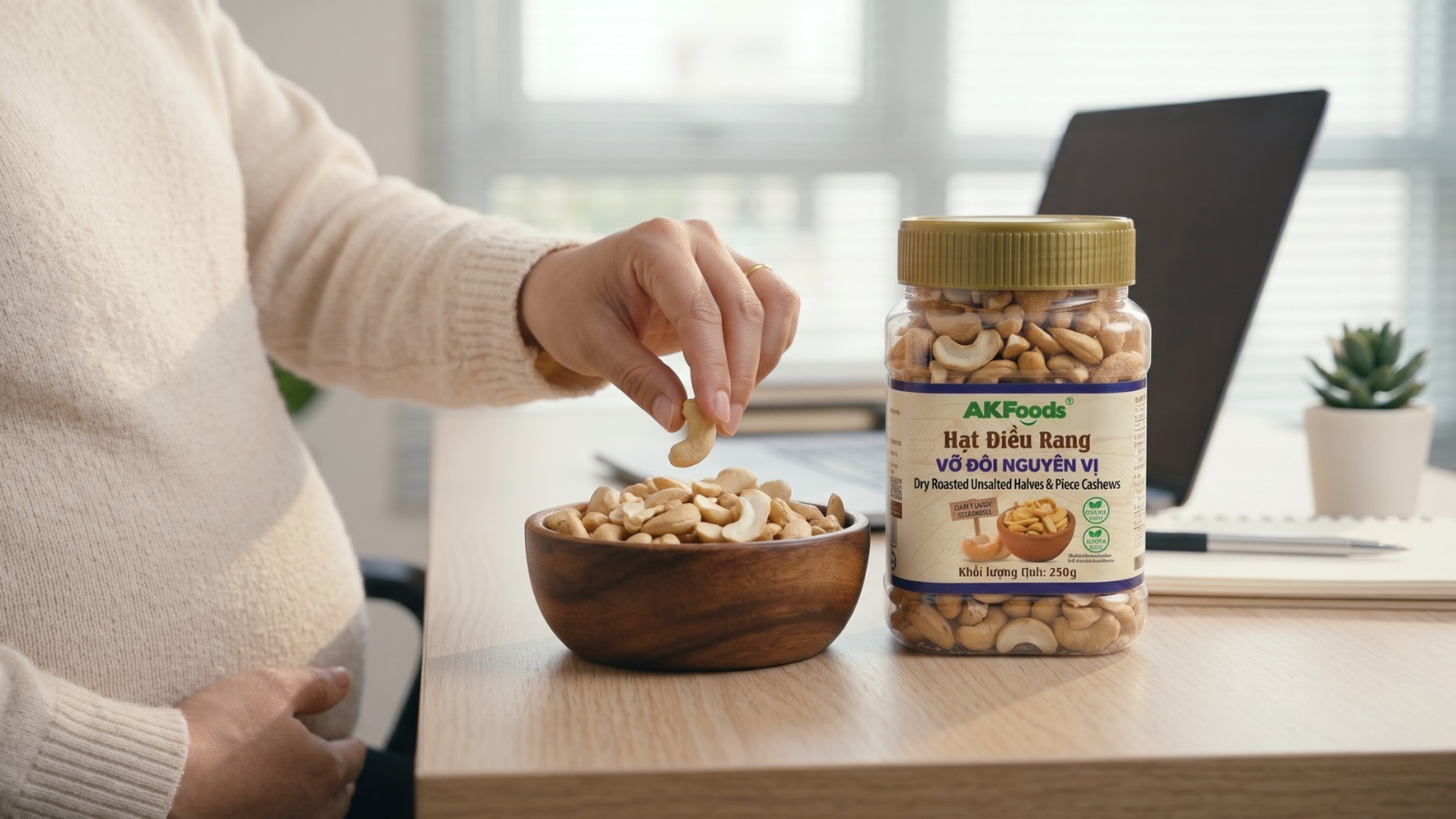
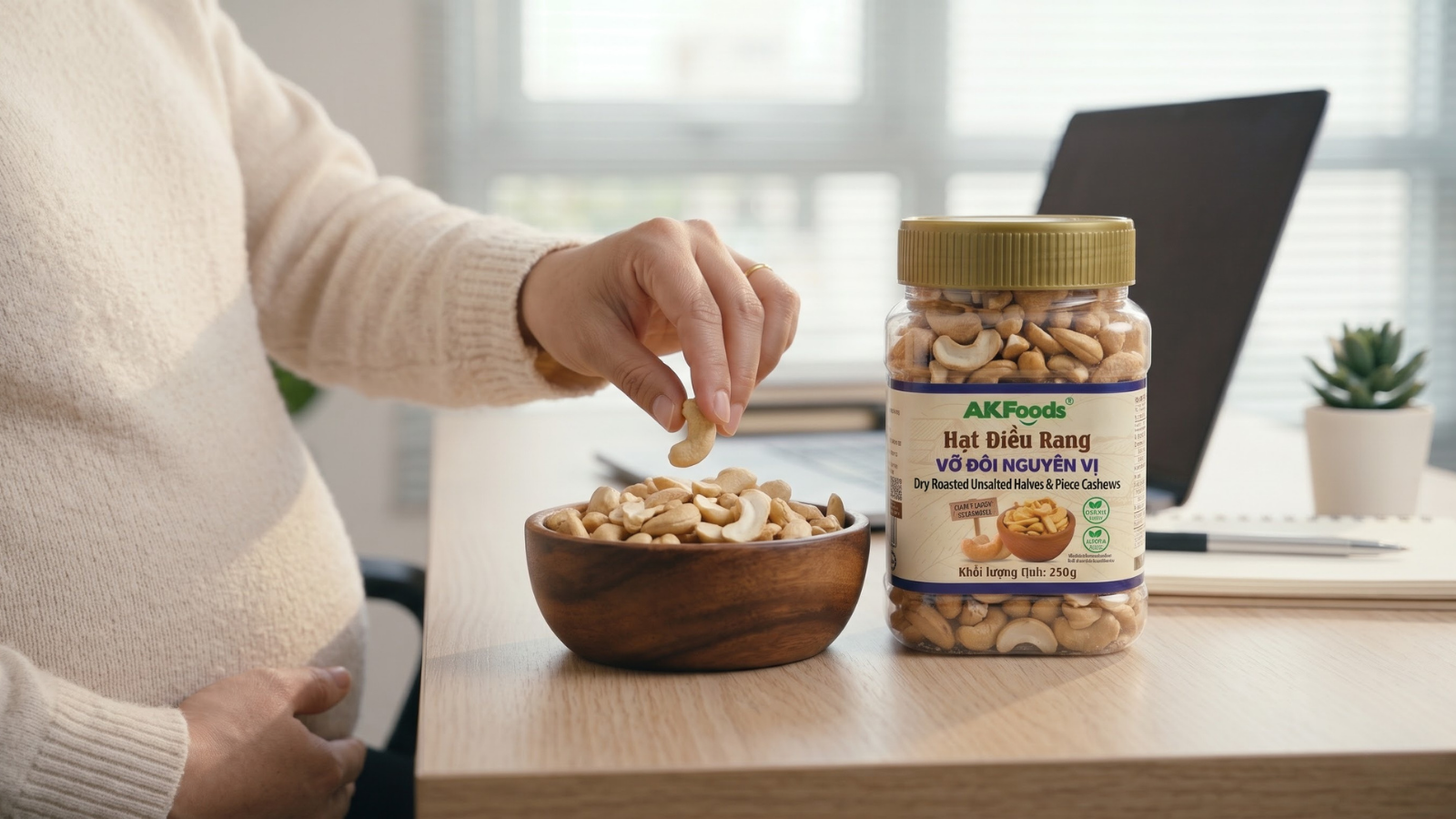
Cashews during pregnancy are an easy way to add minerals that your body needs more of.
- For your baby: Zinc plays a role in cell growth and division, which is happening constantly as your baby develops.
- For you: Cashews contain iron and magnesium. Plant-based iron is absorbed less efficiently than iron from meat, so pair cashews with vitamin C, such as a few slices of orange or strawberries, to help your body absorb it. Among nuts for pregnancy, cashews are a creamy, mild-tasting option if strong flavors bother you.
3. Almonds: Fiber, Vitamin E, and Calcium
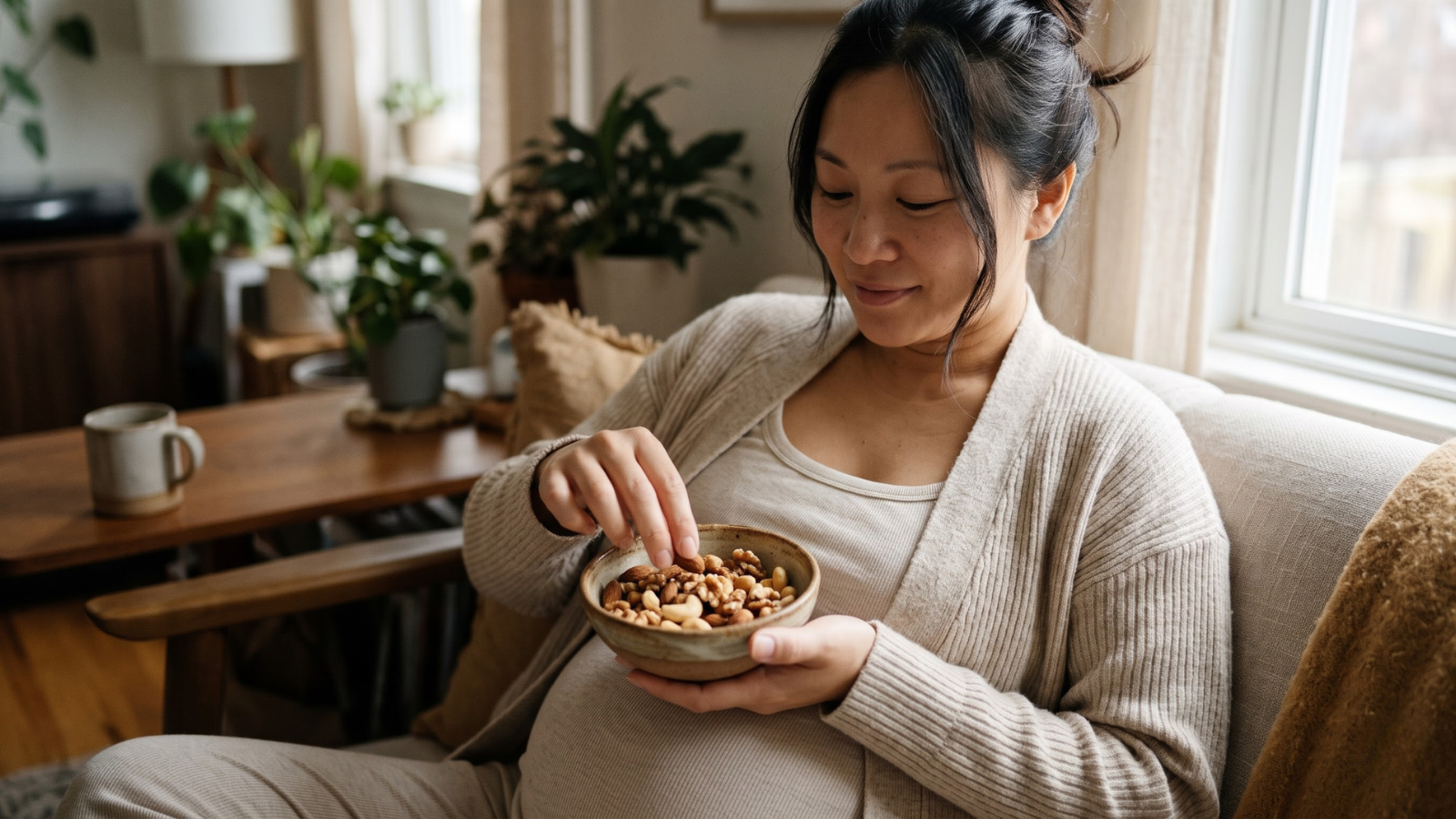
Almonds are a classic among healthy pregnancy snacks. They offer fiber, calcium, vitamin E, and a small amount of folate.
- For your baby: Calcium and magnesium support developing bones and muscles.
- For you: Fiber supports digestion, and vitamin E acts as an antioxidant that protects your cells.
One important note: almonds contain only modest amounts of folate for pregnancy. Major health bodies, including ACOG, the NHS, and the WHO, recommend a daily 400 mcg folic acid supplement to help prevent neural tube defects, regardless of diet. If you’re relying on nuts for pregnancy nutrition, don’t skip your prenatal vitamin or folic acid.
4. Macadamia Nuts: Healthy Fats and Lasting Energy
Macadamias are rich in monounsaturated fats, the same kind found in olive oil, and they supply thiamine and manganese.
- For you: Their healthy fats keep you full longer, and their buttery texture can feel comforting when you’re hungry.
- Keep in mind: They’re very calorie-dense and lower in protein than other nuts, so a small portion goes a long way.
5. Pistachios: Protein and Steady Energy
Pistachios provide plant protein, fiber, potassium, vitamin B6, and the antioxidant lutein.
- For your baby: Protein supplies the amino acids needed to build new tissues.
- For you: Pistachios tend to cause a gentler rise in blood sugar than refined snacks, so they fit well into a balanced eating plan. They aren’t a treatment or guaranteed protection against gestational diabetes. If you’ve been diagnosed, follow your care team’s advice on portions.

How to Eat Nuts for Pregnancy Safely
A little planning makes it easy to get the benefits without the downsides.
- Aim for about 30 grams a day, roughly one small handful. Nuts are nutritious but calorie-dense, so portion size matters.
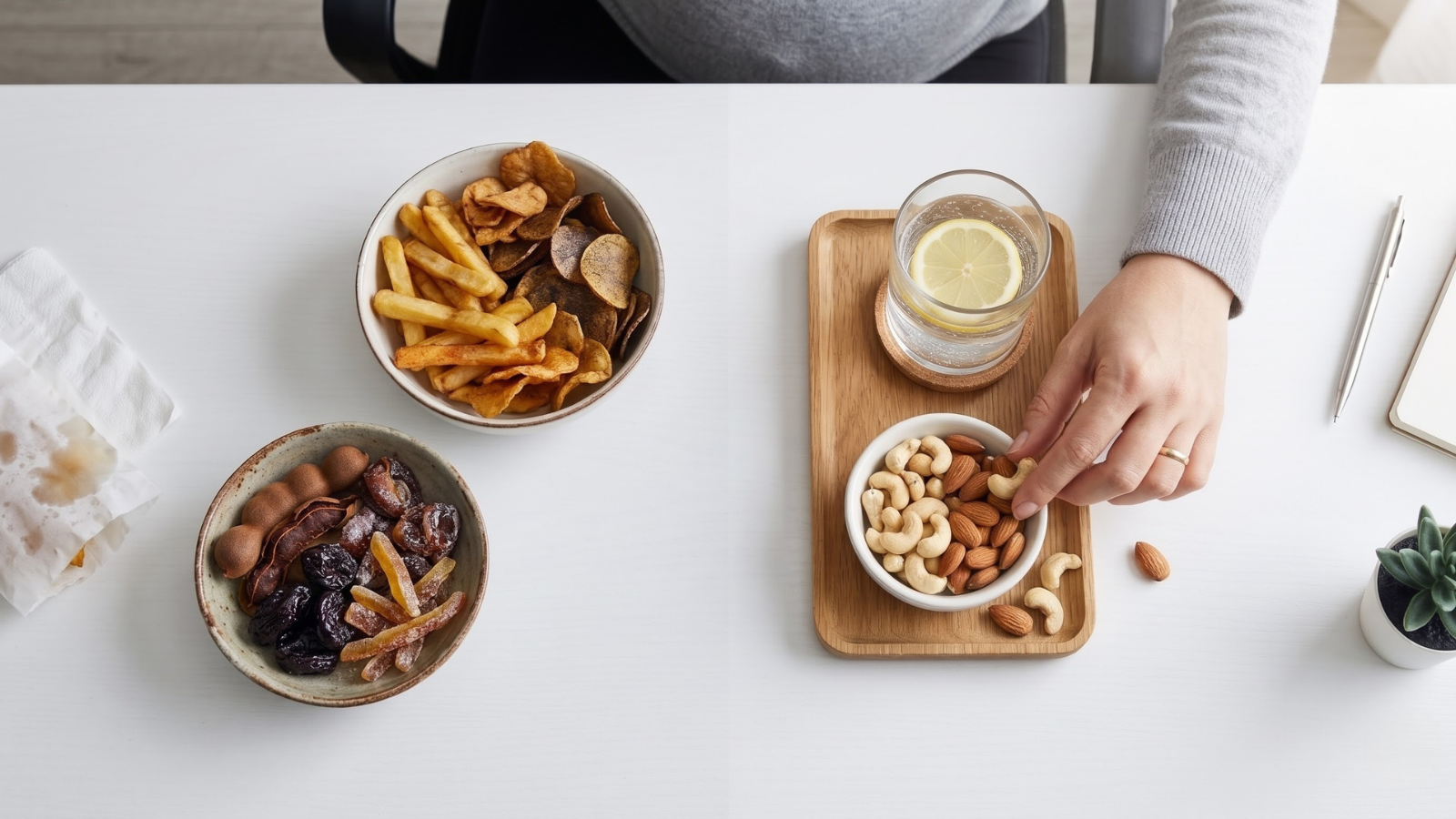
- Choose plain nuts. Raw, dry-roasted, or unsalted nuts are best. Skip heavily salted, candied, or flavored varieties.
- Mix it up. Rotating walnuts, almonds, cashews, and pistachios gives you a wider range of nutrients than eating one type.
- Store them well. Keep nuts in an airtight container in a cool, dark place, or in the fridge, to prevent them from going rancid. Buy from reputable sources, since raw nuts have occasionally been linked to Salmonella recalls.
- Soaking is optional. Soaking nuts can slightly reduce phytic acid, but it isn’t necessary. If you do it, rinse well and eat them soon or refrigerate them.
- If you have a nut allergy, avoid the nuts you react to and talk with your doctor about alternatives.
❓Frequently Asked Questions
1. Can eating nuts during pregnancy cause nut allergies in my baby?
There’s no good evidence that eating nuts during pregnancy causes allergies. The British Society for Allergy and Clinical Immunology (BSACI) notes that avoiding particular foods while pregnant hasn’t been shown to prevent food allergies in infants. Some studies even link maternal nut intake to a lower allergy risk, though that isn’t a guarantee. If you or your family have allergies, asthma, or eczema, ask your doctor for personal advice.
2. Which nuts for pregnancy are best if I only want to buy one kind?
Walnuts and almonds are good all-rounders. Walnuts give you plant omega-3s, and almonds give you fiber, calcium, and vitamin E. A mix is even better.
Can nuts for pregnancy replace my prenatal vitamin?
No. Nuts add nutrients, but they can’t reliably supply the 400 mcg of folic acid recommended before and during early pregnancy. Keep taking your supplement as your doctor advises.
3. Which trimester should I start eating nuts?
Any trimester works. Nuts offer minerals and healthy fats throughout pregnancy.
4. Is it safe to eat nuts if I have gestational diabetes?
Often yes, in controlled portions, since nuts contain fiber, fat, and protein. Check with your doctor or dietitian about the right amount for you.
Adding nuts for pregnancy to your routine is a simple, tasty way to support both your health and your baby’s growth. Stick to about a handful of plain, fresh nuts a day, vary the types, and pair them with a prenatal vitamin and a varied diet. When in doubt, the best nuts for pregnancy are the ones you’ll actually enjoy eating consistently.
This article is for general information and isn’t a substitute for personalized medical advice. Talk with your doctor or midwife about your diet, supplements, and any allergies.